
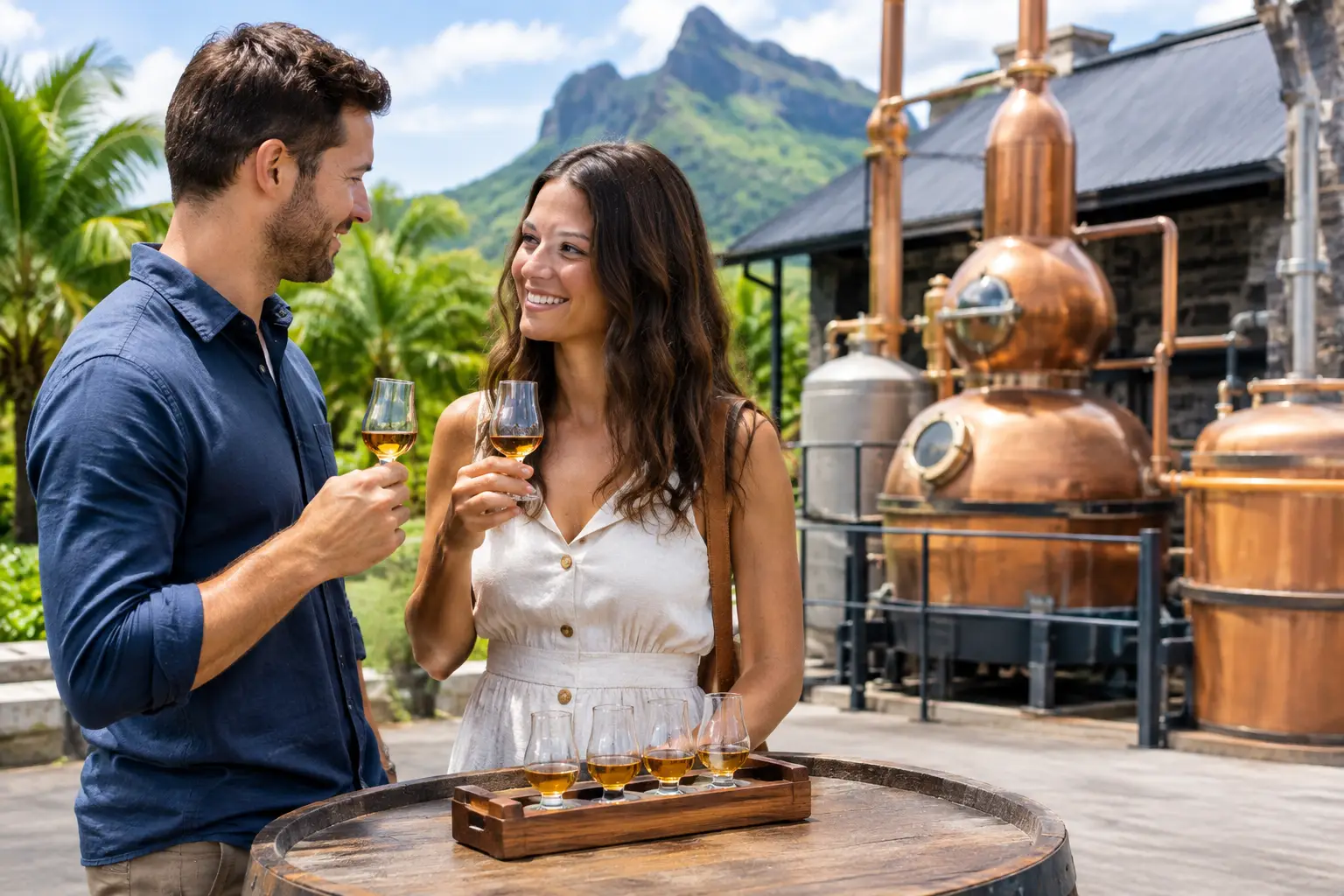
The scent of crushed sugar cane, a warm tropical breeze and a small glass of aged agricole rum: a Mauritius rum distillery tour shows a side of the island that goes far beyond the beach. It is an easy experience to add to a private day out, especially for travellers who enjoy local history, food and well-made spirits. The best visit is not simply about tasting rum. It is about understanding how Mauritius turned a crop that shaped its landscape into something distinctive.
Why a Mauritius rum distillery tour is worth your time
Sugar cane covers large parts of Mauritius, from the lower plains to the slopes beneath the mountains. For generations, it was central to the island’s economy and to the lives of many Mauritian families. Today, cane remains part of the scenery, but distilleries give it a more personal, modern story.
During a visit, you can see how fresh cane juice or molasses is fermented, distilled and matured. The difference matters. Rums made from fresh sugar-cane juice are often described as agricole rums. They can taste grassy, bright and expressive. Molasses-based rums tend to offer deeper notes of caramel, dried fruit and spice, depending on how they are aged and blended.
Most tours are relaxed and accessible. You do not need to be a rum expert, and there is no need to pretend you can identify every flavour in the glass. A good guide explains the process clearly, from the harvest to the barrels, then lets you decide what you enjoy. Some visitors prefer a light white rum in a cocktail; others remember the vanilla, coffee or fruit-infused varieties. For many, the aged rums are the real surprise.
Which distillery should you choose?
Mauritius has several well-known estates and distilleries, each with its own setting and style. The right choice depends on where you are staying, how much time you have and whether you want a simple tasting or a fuller outing.
Rhumerie de Chamarel for scenery and a south-west day
Set in the lush south-west, Rhumerie de Chamarel is popular for its setting among cane fields and green hills. It works particularly well when combined with Chamarel’s coloured earth, its waterfall or a scenic drive through Black River Gorges country. The journey itself is part of the day, with changing views of forest, coastline and mountain slopes.
This is often a good choice for couples and groups of friends looking for a polished visit with a tasting at the end. It can also suit families, although adults should remember that the spirit tasting is the focus. Children may enjoy the grounds and the wider itinerary more than the production explanation.
Saint Aubin for heritage, gardens and the south
In the south, Saint Aubin offers a heritage-estate atmosphere. A visit can bring together rum, vanilla, tropical plants and the history of an old sugar estate. It is a particularly pleasant option if you enjoy taking your time rather than rushing between attractions.
The estate setting makes it easier to create a varied day for mixed groups. One person may be interested in the distillation process, while another prefers the gardens or a leisurely lunch. This flexibility is useful for families with children and for guests who do not drink alcohol but still want to experience the place.
Northern estates for an easier fit from Grand Baie
If you are based in Grand Baie, Trou aux Biches or the north coast, a northern estate can make more sense than spending several hours on the road to the south-west. Labourdonnais is known for its historic estate environment and locally made products, including rum-related experiences depending on the current programme.
Availability, opening times and tour formats can change with the season, private events and production schedules. It is sensible to confirm the distillery’s current arrangements before building your day around it. The most attractive place on paper is not always the best option if it leaves too little time to enjoy the rest of your itinerary.
What happens during the visit?
A distillery tour usually begins with an introduction to the estate and the raw material. You may see cane growing nearby, learn how it is pressed or processed, and then move through the production areas. Fermentation creates the alcohol, distillation concentrates it, and ageing in oak barrels develops colour and complexity.
The tasting generally comes at the end. It may include white rum, flavoured rum, liqueurs and one or more aged expressions. Take small sips, especially in Mauritius’s warm weather, and drink water between samples. A tasting is more enjoyable when you are not trying to fit it into a rushed schedule.
Some sites offer a shop where you can buy bottles, gift sets or locally made products. If you are flying home with a bottle, check your airline’s luggage rules and your destination’s duty and customs allowances. Bottles should go in checked luggage unless they are purchased airside after security.
Plan the day around the tasting, not against it
The practical question is simple: who is driving afterwards? Rum tasting and self-driving are a poor combination, even if the samples look small. Mauritian roads can be narrow, busy and unfamiliar, with changing weather in the central and south-western parts of the island.
A private driver lets everyone enjoy the visit without one person sitting out the tasting or worrying about the journey back. It also gives you room to adjust the day: pause at a viewpoint, have lunch when it suits you, or move on early if the children have had enough. With Pallo, a distillery visit can be organised around your hotel location and the stops that genuinely interest your group, rather than a fixed coach timetable.
Allow more time than the tour duration alone. The visit may take around an hour, but travel time, a tasting, a shop stop and lunch can easily turn it into a half-day experience. From the north or east to Chamarel, for example, a full-day plan is normally more comfortable. Combining too many major attractions is the usual mistake. A distillery, the seven coloured earth, a waterfall, a long beach stop and a late lunch may look close together on a map, but roads and stops take time.
Is it suitable for children and non-drinkers?
Yes, provided expectations are right. Distilleries are working production sites and heritage experiences, not amusement parks. Older children and teenagers may find the machinery, cane fields and estate setting interesting. Younger children can become restless during detailed explanations, particularly on a hot day.
For families, it helps to pair the visit with something active or visual: a short nature stop, a garden, a beach or a scenic viewpoint. Ask in advance whether the chosen venue welcomes children on the standard tour and whether there are non-alcoholic tastings, juices or refreshments available.
Non-drinkers can still enjoy the story behind the rum, the architecture and the local ingredients. No one should feel pressured to taste. A considerate itinerary makes room for different preferences, especially when a couple, family or group of friends wants different things from the day.
A few details that make the experience better
Wear comfortable footwear, as estate grounds can be uneven, and bring sun protection even if the forecast looks cloudy. A light layer can be useful in cooler central areas or during a sudden shower. Morning visits are often pleasant before the heat builds, while an early afternoon visit can fit well after a relaxed lunch.
Eat beforehand, particularly if you plan to taste several rums. Keep your camera ready for the estate and cane fields, but always follow any rules in production areas. Most importantly, leave enough space in your plan to enjoy the conversation. Mauritius is best discovered through people as much as places.
A rum distillery visit can become one of those quiet holiday memories: not a rushed tick on a list, but an afternoon when you understand a little more about the island in your glass. Choose the estate that suits your route, arrange a safe journey home, and let the day unfold at a comfortable Mauritian pace.